
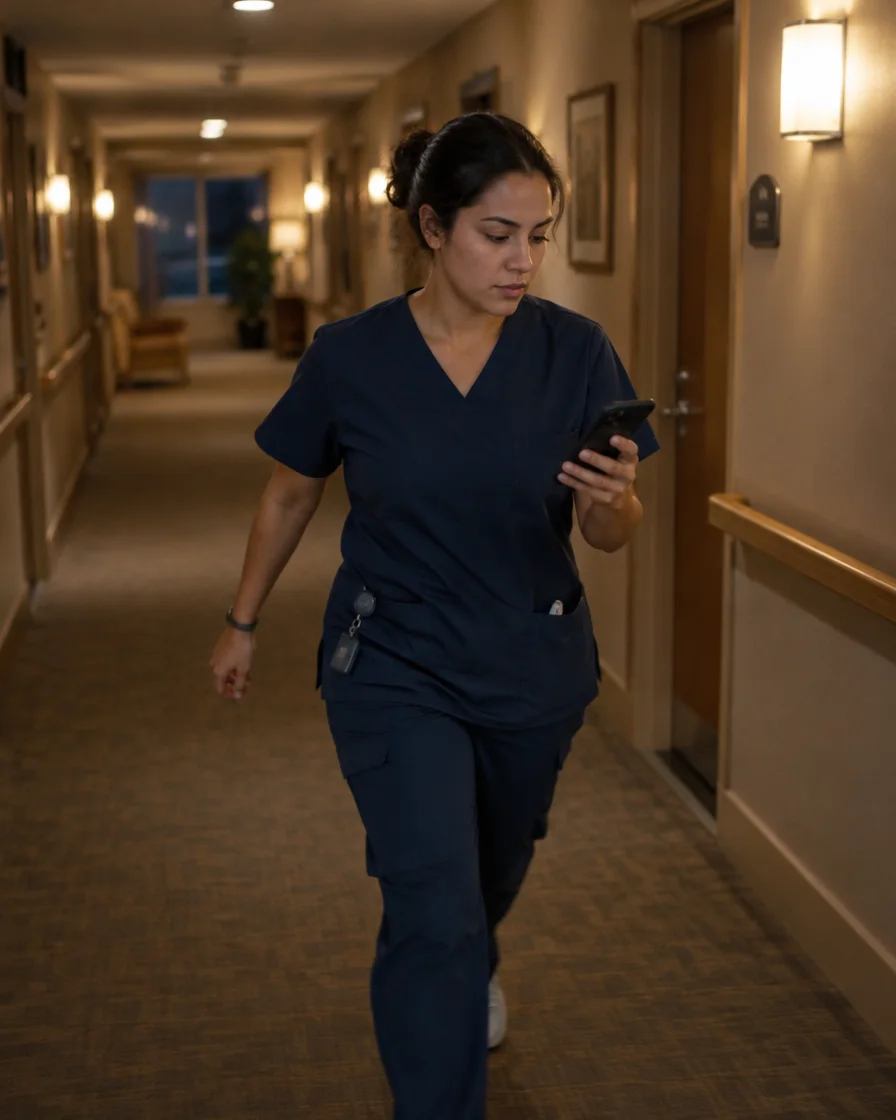
For caregivers on shift
- Alerts go only to whoever is checked in tonight
- One tap on "I've got it" tells the team help is on the way
- A blurred room view instead of photos on a personal phone
The CareHalo360 Halo never records video. It calls the caregiver on shift the moment a resident falls, and it learns each resident's normal nights so your nurse sees a change early.
$69 per room a month · $0 up front · Installed for you
Fall detected
Building 2, Room 12
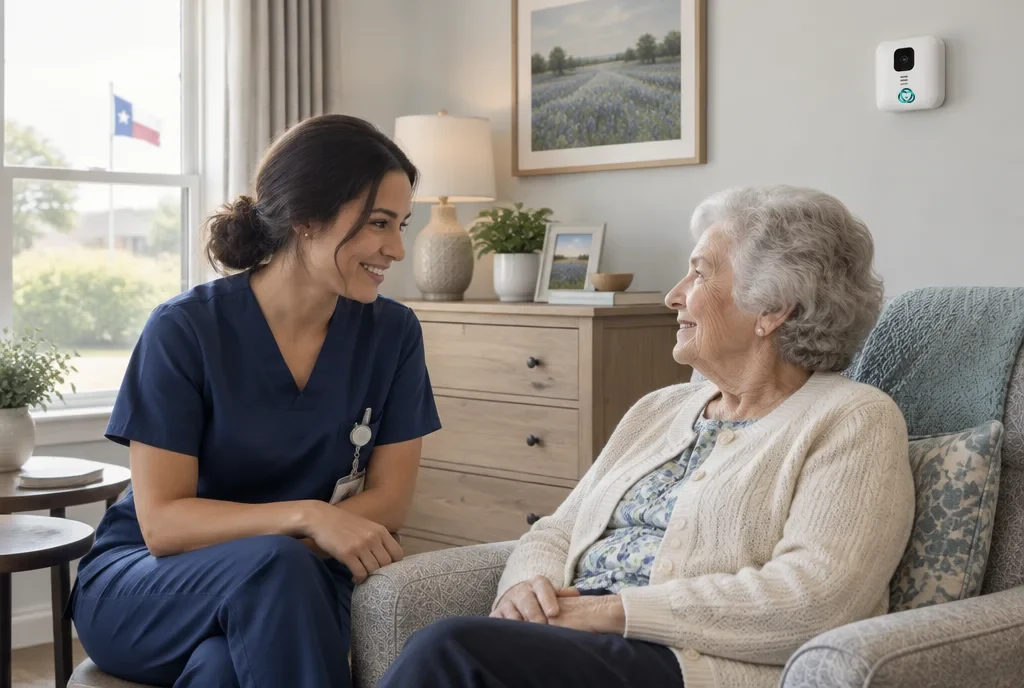
CareHalo360 is fall detection and care insight for assisted living and memory care communities. The CareHalo360 Halo mounts on the wall of a room and never records video. When someone falls, the caregiver on shift gets a phone call, a text and an app alert within seconds. It also tracks each resident's nights, flags changes for the nurse and answers staff questions through Ask CareHalo360. It costs $69 per room per month, or $59 with a one-year agreement.
Caregivers get the alert and the room. Directors and nurses get what changed overnight and why.

Fall detected
Building 2, Room 12
A phone call, a text and an app alert the moment a fall is confirmed. It keeps calling until someone answers.
See how alerts workAlerts go to whoever is checked in on shift. One tap on "I've got it" tells the team help is on the way.
See shift alertsPhotos stay with admins. Deleted after 2 days.
Caregivers see a blurred room and a stick figure. Only admins see the 3 still photos, deleted after 2 days.
See how privacy worksTimes out of bed each night
Each resident's nights from night one. After 14 nights CareHalo360 knows their normal and flags a change.
See Care Change TrendsShows when a resident's needs change, up or down, against your own care levels, with the nights behind it.
See Care Level MatchWho had a rough night?
Room 12 was up 4 times, about 3 more than usual. Room 7 needed help twice. No falls overnight.
Ask a question in plain words. Get an answer from your records and a Morning Report at shift change.
See Ask CareHalo360A heads-up to the caregiver on shift when a resident at risk sits on the edge of the bed at night, before a fall happens.
A heads-up before a fall
Everything happens on the device in the room. Only the alert and the numbers leave it.
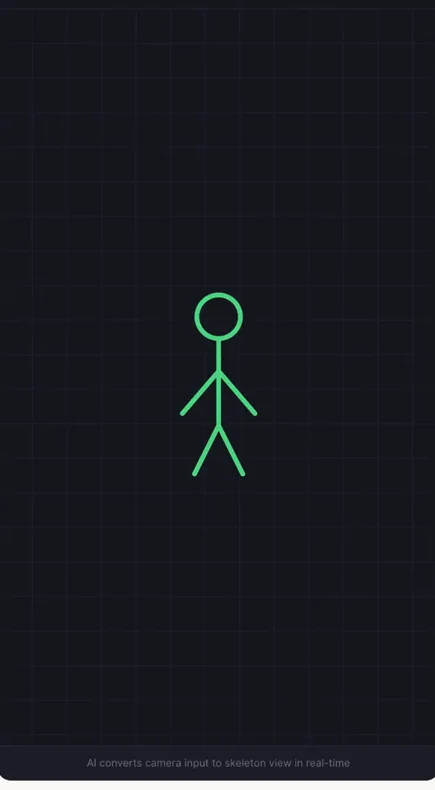
The Halo turns each person into a stick figure of 17 points. No faces, no video and no sound.
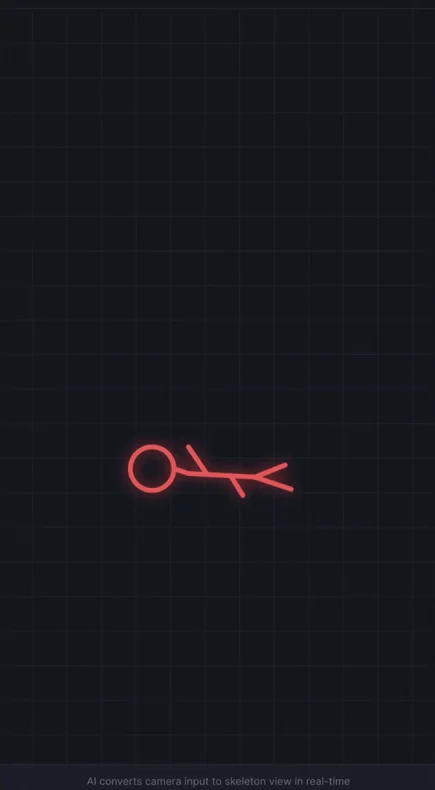
It checks the fall before it alerts, so a resident sitting down on the floor on purpose won't wake the building.
A call, a text and an app alert. If nobody answers, it moves to the next person on the list.
Residents keep their dignity, and staff phones never hold a picture of anyone.
Read how privacy worksEvery feature on this page is included. The Halo, installation, training and support come with the plan.
Month to month
$69per room a month. Cancel anytime.$1,104 a month, or $944 on a one-year agreement
One-year agreement
$59per room a month, for communities that plan ahead.A 30-day first-month refund applies to both plans.
Book a demo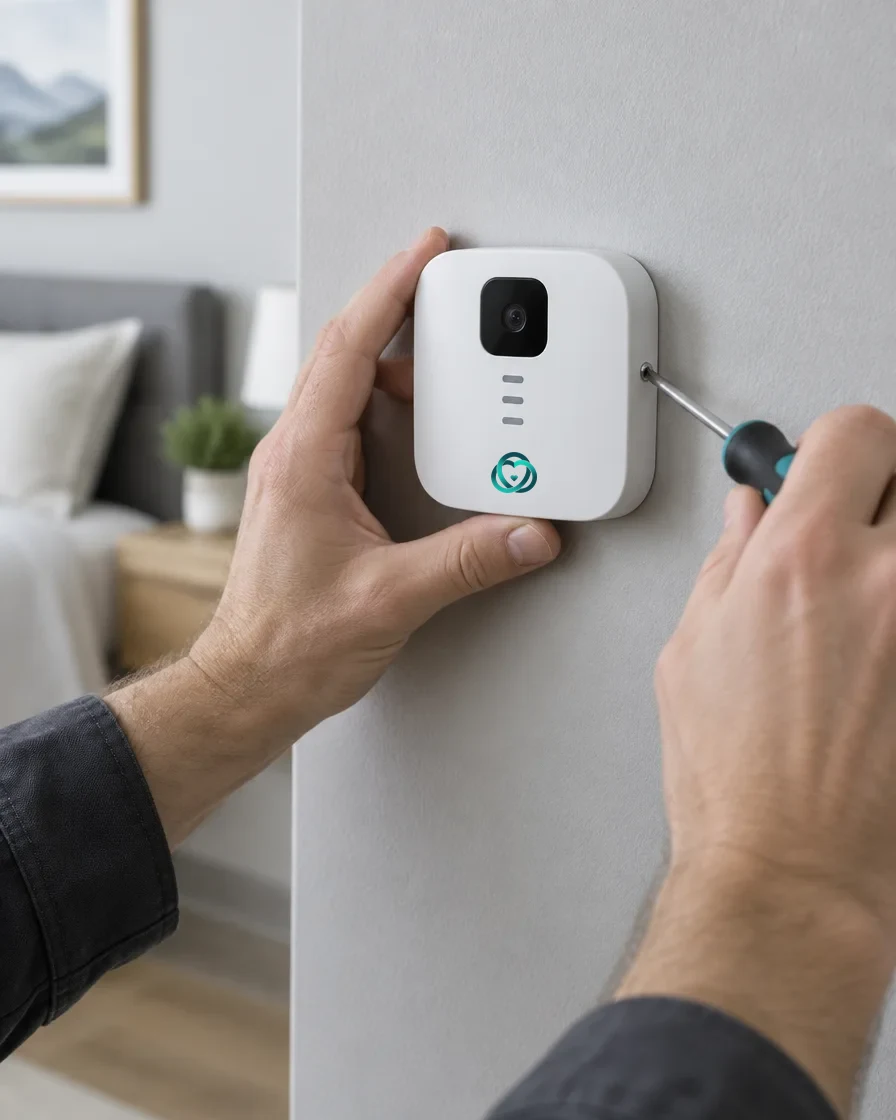
We visit, walk your rooms and agree who gets each alert.
One Halo per room, about 15 minutes each, aimed to see the whole room.
Consent forms for residents and one short session for staff.
A real person on (713) 517-6792 when you need one.
CareHalo360 was founded by Dawood Kokawala, who has been writing software for 32 years. Before CareHalo360 he built Careflow, a phone assistant for healthcare offices that was acquired in 2025. The company is MSDS ALF Growth Solutions Inc., a Texas corporation based in the Houston area.
No. The Halo is a camera, but it never records or sends video. It does its thinking right there on the wall. Only at the moment of a fall does it take a blurred picture and send it with the alert. Those pictures are deleted from our server after 2 days, and you can turn them off completely in settings.
The Halo turns the person in the room into 17 dots on the body, like a stick figure. When those dots go down to the floor and stay there, it recognizes a fall and calls your team right away.
You choose. In a community, alerts go to the staff on shift and to family members the resident approves. If the first person does not answer, the Halo calls the next one. Anyone can stop getting alerts at any time.
$69 per month per room. The Halo, the alerts and our support are all included. There is nothing to buy up front and no installation fee.
No. The Halo goes up with one screw, about 6 feet high, plugs into the wall and connects to your Wi-Fi. At home it takes about 15 minutes. For communities, we install every room for you.
No. CareHalo360 calls the people you choose. A person always decides what happens next.
No. CareHalo360 is not a medical device and does not diagnose or treat anything. It lets people know when a fall happens so help arrives sooner.
We'll walk your rooms and show your team exactly what the night shift and the office will get. We reply within one business day.